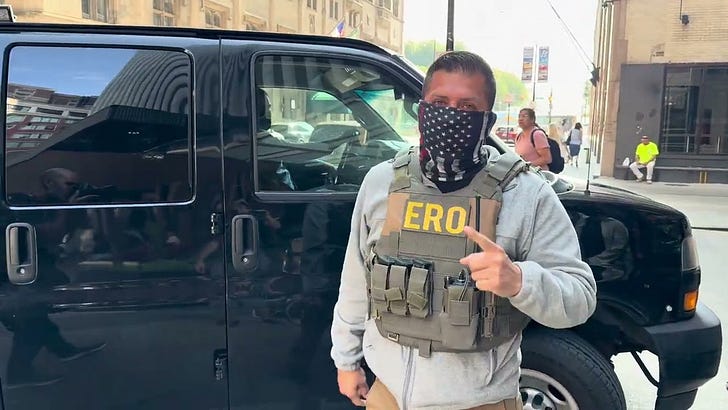
WASHINGTON — Nobody in the United States Congress has put a reform bill on the table. Not in the Senate. Not in the House. Not in the committee rooms where men in expensive suits argue about immigration enforcement over catered lunches while ICE agents in masks drag people out of churches.
Nobody — until Friday.
Rep. Brian Fitzpatrick, R-Pa., a former FBI agent who knows what a warrant looks like, walked up to the Capitol Hill microphone with Rep. Tom Suozzi, D-N.Y., and dropped the Bipartisan ICE Reform Act of 2026 on a Congress that has been debating everything except solutions.
“It’s really the only practical solution right now,” Fitzpatrick said.
That’s a sentence worth reading twice.
The bill does two things Washington said couldn’t happen at the same time: it fully funds the Department of Homeland Security — at the levels already passed in H.R. 7147 — and it puts handcuffs on how that money gets used.
Body cameras. Identification badges. No more masks on federal agents who knock on your door and don’t say who they are. Warrants — actual warrants, signed by actual judges — before ICE can make a criminal arrest or walk into a school, a hospital, a church, a synagogue, or a polling location on Election Day.
“That hasn’t even been talked about,” Fitzpatrick said, with the flat delivery of a man who’d looked at the competing bills and found them wanting. “That’s here.”
Independent FBI investigations for every ICE agent-involved shooting. Findings go to the U.S. Attorney where it happened and to the U.S. Attorney for the District of Columbia. That’s accountability with an address.
The bill also expands anti-doxxing protections for law enforcement officers — adding license plates, GPS coordinates, biometric data, and workplace addresses to the definition of “restricted personal information” — which is the kind of protection nobody argues against, which is precisely why it’s in here.
Fitzpatrick was direct about what’s missing from everything else moving through this building right now.
“What the Senate sent over has no reforms. What the House is considering today has no reforms, and this whole debate’s been about reforms and nobody’s offered it in either chamber.”
He and Suozzi are prepared to push it to the floor. Force a vote. Make people go on the record.
Asked about reception from colleagues, Fitzpatrick didn’t spin it.
“I’ll let you know,” he said. “We just put it out today. We’ll find out.”
That is the most honest thing said in this building all week.
The bill isn’t perfect for immigration advocates — it requires local and state law enforcement to cooperate with federal immigration actions, with funding penalties for those that don’t. That’s a pressure point. Sanctuary cities will notice.
But warrants at churches. Cameras on agents. No masks. FBI oversight of shootings.
In a Congress full of people who talk about reform and introduce none of it, two guys from Pennsylvania and New York put paper to the idea.
Now comes the hard part: finding out who else in this building means what they say.