

WASHINGTON — The man who dug John Lennon’s grave at Ferncliff Cemetery in Hartsdale, New York, made $14.50 an hour in 1980. He didn’t know who Lennon was. He knew the ground was cold and the backhoe was acting up and his supervisor was yelling about the television trucks blocking the service road.
Lennon had come to America on what they now call an O-1 visa. Extraordinary ability. The government wanted to deport him because he’d said some things Richard Nixon didn’t like, and so his lawyer—a guy named Leon Wildes—had to convince the immigration people that a Beatle was extraordinary enough to stay.
This was considered a close call at the time.
Now it is January 2026, and Leon Wildes’ son Michael runs the family law practice on Madison Avenue, and he no longer represents Beatles or Sinéad O’Connor or Boy George. He represents, in his own words, “scroll kings and queens.”
His wife, he told the Financial Times, doesn’t really approve.
In Miami, there is an immigration lawyer named Joe Bovino who told a reporter that 65 percent of his O-1B clients are now OnlyFans creators and social media influencers. The O-1B is the extraordinary artist visa. It is for people of such tremendous cultural significance that America would be diminished without them.
Bovino’s clients film themselves in a house in Florida called the Bop House. Several of them live there together. They are from Canada and China and Mexico. They have millions of followers. They make content.
“It’s not just cat videos anymore,” Bovino said. “It’s social media influencers making lots of money.”
This is the legal standard now. Making lots of money.
A woman from Canada named Aishah Sofey lives in the Bop House. She has millions of followers on Instagram. Another woman named Joyy Mei, from China, used to live there too. They came to America to make content that you cannot describe in a family newspaper, and the United States government examined their applications and said: Yes. Extraordinary. Welcome.
The numbers are something. In 2021, the government approved 7,294 O-1 visas. In 2022, it approved 19,102. That is a 162 percent increase in one year. The approval rate is 94 percent. If you have the followers and the earnings statements, you are in.
An immigration lawyer named Elektra Yao explained the appeals process to the Financial Times. “A lay person is very easily impressed by a large number of followers,” she said. “You don’t need to be a rocket scientist.” You don’t need to be a Beatle either.
There is a boy band now—they call themselves Boythrob—and one of the members is stuck in India. His name is Darshan. The other three are in America, so when Boythrob performs, Darshan appears on a laptop screen propped up next to his bandmates.
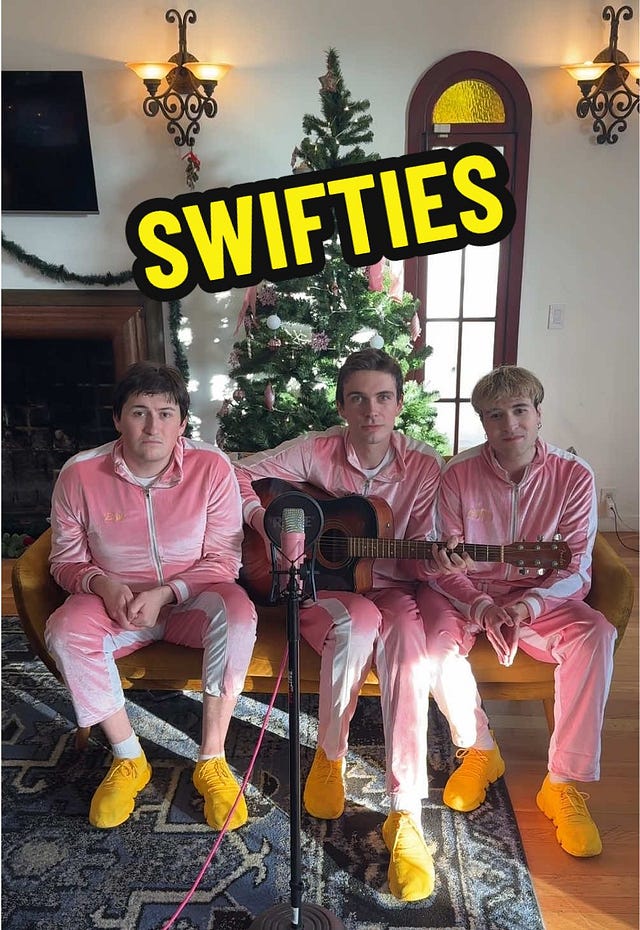
 Tiktok failed to load.
Enable 3rd party cookies or use another browser
Their first gig was at a retirement home in Hollywood. The residents did not know what they were watching.
Darshan posts amazing videos explaining his visa situation. “Our immigration lawyer said we need one million followers,” he says into his phone. He is not joking. This is the standard. One million followers. He has crossed the threshold now. His visa application has been strengthened. In the comments, people pray for Darshan’s approval like it’s a board exam result.
The lawyer who invented the extraordinary artist visa did it to save John Lennon from Richard Nixon. Now it saves Darshan from having to perform via Zoom at nursing homes.
Here is what the law actually says. To get an O-1B, you need to win a major internationally recognized award—a Grammy, an Oscar—or you need to meet three of six criteria. The criteria include things like “leading role in a distinguished production” and “high salary compared to peers.”
An immigration lawyer named Fiona McEntee told reporters that appearing at a store opening can count as a leading role in a distinguished production. Brand partnership deals count as proof of talent. Follower counts count as critical acclaim.