

WASHINGTON — Six days before Democrats swept Congress, 13 House Democrats put a marker on the record: if the artificial intelligence boom goes bust, Washington should let the companies fail and rescue the workers instead. After Tuesday’s wave, that marker reads less like a protest and more like a preview.

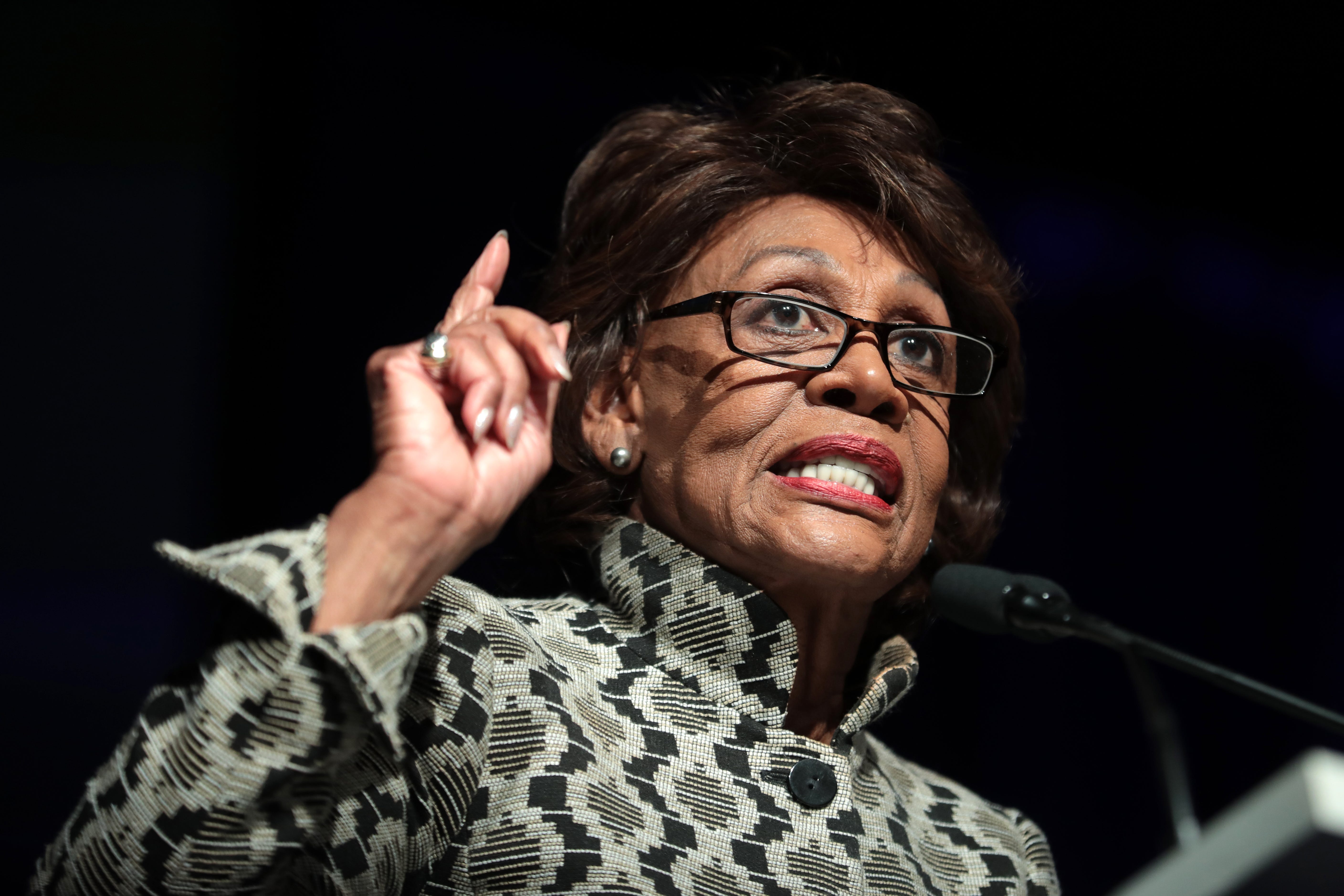
H.Res. 1642, introduced Oct. 29 by Congressional Progressive Caucus Chair Greg Casar (D-Texas), declares the House opposed to the emergency toolkit that rescued Wall Street in 2008 and markets in 2020. Its co-lead is Rep. Maxine Waters (D-Calif.), the ranking Democrat on the Financial Services Committee — and, with Democrats now in the majority, the senior member in line to chair it in January.
The other 11 original cosponsors are Reps. Jan Schakowsky (D-Ill.), Jesús “Chuy” García (D-Ill.), Rashida Tlaib (D-Mich.), Delia Ramirez (D-Ill.), André Carson (D-Ind.), Danny Davis (D-Ill.), Chris Deluzio (D-Pa.), Brad Sherman (D-Calif.), Valerie Foushee (D-N.C.), Pramila Jayapal (D-Wash.) and Analilia Mejia (D-N.J.). Four of the 13 represent Illinois.
What the resolution opposes
The resolution names the agencies and the tools. It opposes the Federal Reserve, the Treasury Department and the Federal Deposit Insurance Corp. providing special assistance — “through emergency lending under section 13(3) of the Federal Reserve Act, the Exchange Stabilization Fund, direct capital infusions, a debt guarantee program, or otherwise” — to rescue “insolvent artificial intelligence-related firms or financial firms with exposure to the artificial intelligence sector.”
It also opposes any measure to shield AI executives from accountability, and any federal money marshaled to keep failing AI firms out of bankruptcy.
Those are not abstract targets. Section 13(3) lending needs only the Fed board and the Treasury secretary’s approval, and the Exchange Stabilization Fund sits under the Treasury secretary with presidential sign-off. Neither requires a new vote of Congress — which is why the authors want lawmakers on the record before a crisis, not during one. The 2010 Dodd-Frank law already bars 13(3) rescues of a single failing firm, but the broad-based facilities stood up in 2020 showed how far the authority can stretch.
Bankruptcy, clawbacks and a safety net
Instead of rescues, the resolution says insolvent AI firms should wind down or reorganize through ordinary bankruptcy, and failing financial firms should go through the orderly resolution process already in statute. Those proceedings, it says, should protect competition, workers and consumers and put pension and retirement holders first.
It goes further on executives. Those found to have taken excessive risks or broken the law should repay their gains and everything bought with them — a list that runs from mansions, yachts and private aircraft to golden parachutes, unvested equity and, pointedly, survival bunkers.
For everyone else, it backs federal stimulus to create jobs and shore up state and local payrolls; unemployment insurance, nutrition aid and rental and housing assistance; protections for pension and retirement savers; automatic stabilizers that kick in without waiting for Congress; and targeted aid to low-income households, near-retirees and underserved communities.
The bubble case
The preamble builds the argument with numbers. It says AI-related stocks drove as much as 75 percent of S&P 500 returns since October 2022; that one AI firm’s market value equals roughly 16 percent of GDP, against less than 6 percent for the 1990s tech leader at its peak; and that 10 or fewer AI-linked giants are together worth more than $27 trillion, over 80 percent of GDP.
It adds that AI firms carry trillions in debt, much of it in opaque private credit; that data-center borrowing runs multiples above projected revenue; that factory construction investment fell more than 25 percent from its 2024 peak by mid-2026; and that consumers are absorbing higher electricity bills from data-center demand. It also cites the White House AI and crypto czar’s personal stakes in at least 449 AI-linked companies.
A collapse, the authors warn, could match or exceed the dot-com bust or the 2008 crisis.
Why Tuesday changes the math
Democrats won control of both the House and the Senate in Tuesday’s midterms, a broad repudiation of President Trump and the GOP. House Minority Leader Hakeem Jeffries formally launched his bid for speaker in a letter to colleagues Wednesday and is poised to become the first Black speaker in history. Speaker Mike Johnson has told staff he will not run for minority leader.
Jeffries cast the win in terms that echo the resolution’s preamble, pledging to “bring accountability to those who have visited unprecedented corruption on this country.”
Casar has said he wants a floor vote early in the next Congress if Democrats took the House. Now they have. Because the 119th Congress ends in January, the measure would have to be reintroduced in the 120th to get that vote.
A non-binding resolution needs no Senate vote or presidential signature and changes no law. But a Financial Services chair who co-wrote it, and a Democratic Senate, make binding limits on 13(3) and Exchange Stabilization Fund use a live question for the first time.
Be sure to join the Migrant Insider group chat on Substack if you haven’t already.
No more 1974 "Our long national nightmare is over." No more of 1984's "too big to fail." In April 2009 President Barack Obama told the CEOs of the insolvent Big Three automakers, “My administration is the only thing between you and the pitchforks.”
We have always had norms, rules and laws, but a certain class of people always seemed to manage to circumvent them. It may be Pollyannaish of me to think so, but I am reasonably hopeful this time that the practice of letting bigshot tortfeasors off the hook will finally be halted.
The era of protecting criminal politicians and forcing the American taxpayer to bail out extractive CEOs must end.
Love it. Now if we could only get Canada (and the provinces) to do the same.