
Crossing the Line: How Women Activists Expose America's Immigration Cruelty
Sarah Towle centers the "Angry Tías" of the Rio Grande Valley, revealing how radical care becomes the ultimate resistance against systemic cruelty.
BOOK REVIEW — In Crossing the Line: Finding America in the Borderlands, Sarah Towle accomplishes something rare in immigration journalism: she transforms policy abstractions into human truth while elevating the voices of those fighting daily battles for dignity at the US-Mexico border.
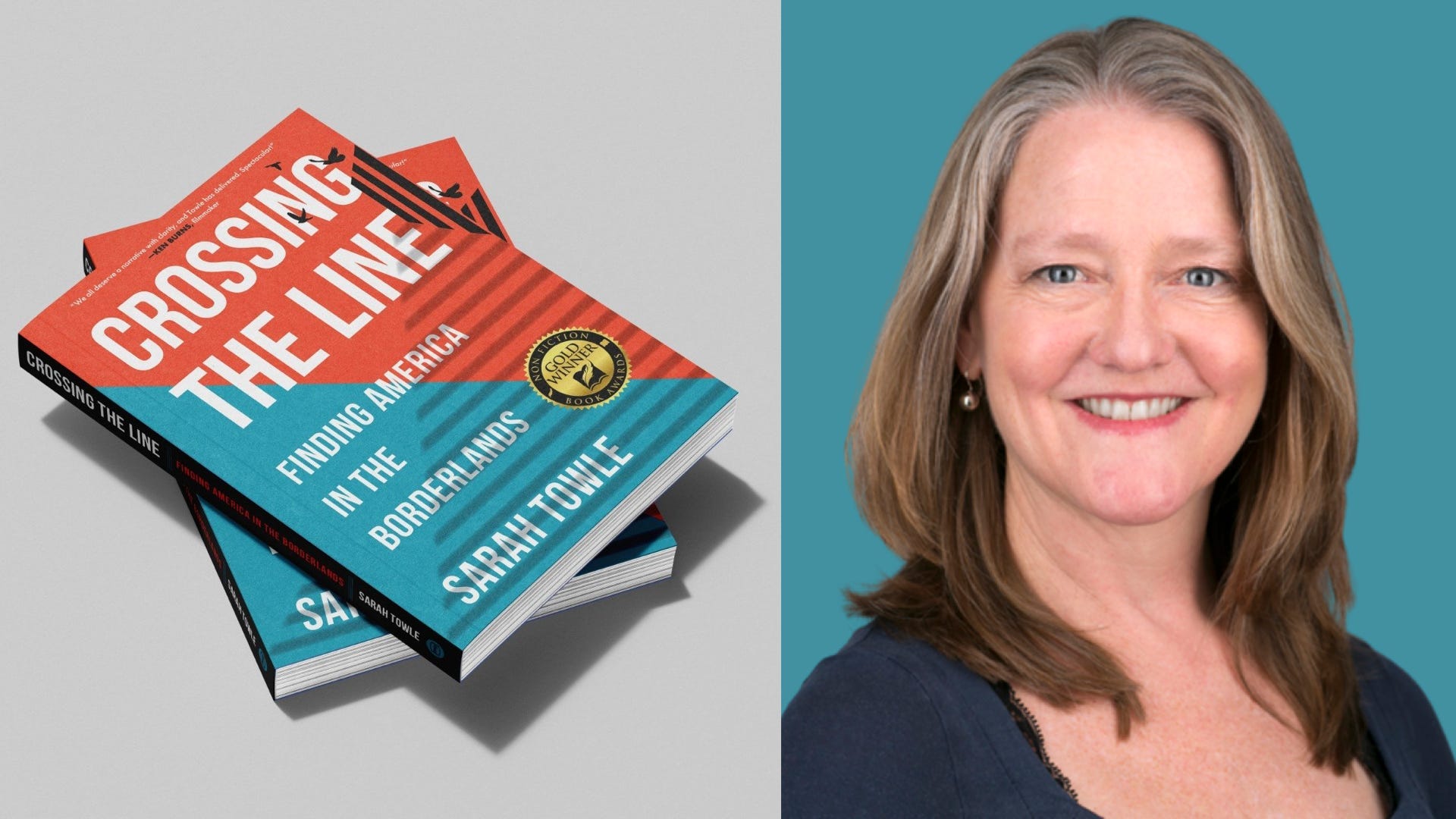
This second edition, updated to reflect the darkening reality of a second Trump administration, is both historical document and moral reckoning—a book that doesn’t just inform but demands we reconsider what American values actually mean in practice.
What distinguishes Towle’s work is her deliberate centering of women as the moral backbone of border resistance. The Angry Tías & Abuelas of the Rio Grande Valley emerge as the book’s beating heart—aunties and grandmothers who transformed familial care into radical political action.
Susan Law, Cindy Candia, Elizabeth “Lizee” Cavazos, Madeleine Sandefur, Joyce the archivist—these women become Towle’s guides through the humanitarian catastrophe unfolding in their communities. They are not passive observers but active agents of welcome, their work simultaneously ordinary and heroic.
Towle’s genius lies in recognizing that these women’s stories have been systematically excluded from mainstream immigration discourse. While politicians thunder about “border security” and cable news fixates on chaos narratives, the Tías quietly do the unglamorous work: crossing into Matamoros to serve asylum seekers living in tents, documenting abuses inside detention centers, tracking down children stolen from their mothers.
They operate within what Towle calls the “100-mile law enforcement zone”—a constitutional gray area encircling the entire United States where rights supposedly guaranteed to all simply evaporate.
The author introduces us to Jodi, an attorney who witnesses seven mothers testify about children torn from their arms, then discovers 280 more women detained at Port Isabel, all separated from their children.
We meet Jennifer Harbury, who connects contemporary border violence to decades of US intervention in Central America. Through Towle’s empathetic reporting, these women’s labor—intellectual, emotional, physical—becomes visible in ways policy debates never allow.
Towle herself, a white woman educator and writer, navigates her own privilege thoughtfully. She positions herself as witness and amplifier rather than savior, acknowledging the ease with which her blue passport allows border crossings while asylum seekers face detention, deportation, and death. Her journey from Brownsville to Tijuana becomes a geography lesson in American hypocrisy, mapping the “Border Industrial Complex” that profits from human suffering.
The book doesn’t shy from institutional critique. Towle meticulously documents how “prevention through deterrence”—a forty-year-old strategy that has never stopped migration but has killed thousands—remains the bedrock of US policy. She traces the detention-to-deportation pipeline from Reagan-era Haitian asylum denials through Obama-era detention expansion to Trump’s family separation spectacle. Yet amid this systemic cruelty, the women activists refuse despair. They create what Towle calls “a handbook for a more humane world.”
Crossing the Line is also a devastating exposé of gendered violence. Mothers who fled rape and persecution only to have their children seized by US officials. Women detained in brutal conditions, denied due process, then deported back to danger. Towle gives particular attention to Cameroonian asylum seekers—teachers, lawyers, entrepreneurs fleeing civil war—who endured seventeen-month average detentions before ICE deported them in defiance of international law. Their testimonies, recorded in the scorching summer of 2022, chronicle abuses so routine that investigators struggle to keep pace.
The prose is urgent without being preachy, informed without being academic. Towle writes with a journalist’s precision and a humanist’s heart, rendering complex immigration policy comprehensible while never losing sight of individual human cost. Her metaphor of walls as a “second equator” cleaving rich from poor, white from Brown, safety from violence, crystallizes how border enforcement has become global apartheid.
If the book has a weakness, it’s that Towle’s earnestness occasionally overwhelms her narrative—the reader wants to spend more time with the Tías themselves, to hear their voices unmediated. But this minor critique hardly diminishes the work’s power.
Crossing the Line stands as essential reading for anyone seeking to understand how ordinary people maintain moral clarity when their government abandons it. Sarah Towle has created more than reportage; she’s built a monument to the often thankless, frequently invisible work of women who refuse to let cruelty be normalized. In documenting their resistance, she offers us a choice: Will we fly the tattered flag of American ideals alongside them, or let it fall entirely?
Follow us on Instagram.


This sounds like a very interesting book to read. So sad that people are dehumanized and ignored by most.
This review beautifully captures how these women activists have created a counter-narrative to the abstact policy debates we usually see. What strikes me most is how Towle positions care itself as a form of political resistence, not just charity or kindness, but a deliberate challenge to the dehumanization baked into enforcement structures. It makes me wonder if mainstream immigration coverage avoids these stories precisely becuase they reveal how much of the "border crisis" rhetoric depends on erasing the people doing the actual humanitarian work. The Tías' unglamorous labor exposes the gap between stated American values and lived reality in ways statistics never could.